Fuzzy AI Review
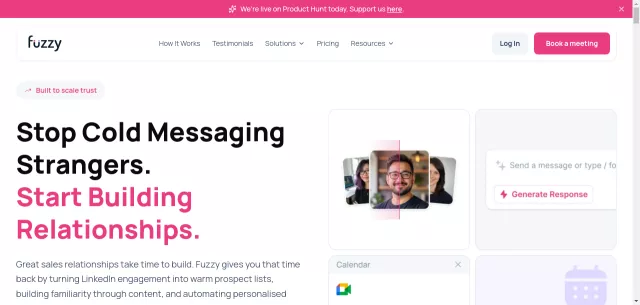
Introducing Fuzzy AI – the LinkedIn Social Selling & AI SDR Platform redefining B2B outreach. Forget cold calls; Fuzzy AI warms prospects long before you send a message, transforming LinkedIn engagement into booked meetings. It automates smart outreach, builds authority, and converts warm leads. Now live on Product Hunt, Fuzzy AI champions a “relationship-first” sales philosophy. This intelligent platform reclaims valuable time for B2B sales teams, saving reps up to 60% by automating prospecting and hyper-personalized engagement. Teams achieve 2-3x higher reply rates, safeguarding LinkedIn account integrity.
Main Features
- Relationship-First Selling: Automates prospect “warm-up” via private Prospect-Only Feed. Engage directly, build familiarity; reps recognized pre-outreach.
- Hyper-Personalised AI Messages: AI analyzes brand voice and context, generating human-sounding LinkedIn messages, emails, and comments.
- Unlimited Lead Discovery: Integrates with Sales Navigator, bypassing limits. Safely pulls ideal buyers compliantly with robust guardrails.
- Account Safety: Operates strictly within LinkedIn guidelines. Smart prompting, human-paced activity, user review protects accounts.
Main Target
Fuzzy AI is designed for high-growth B2B sales teams in SaaS, EdTech, and FinTech. It’s ideal for sales professionals aiming to:
- Achieve 2-3x higher reply rates.
- Reduce manual prospecting time.
- Build LinkedIn authority without account risk.
- Transition to a relationship-driven sales model.
Fuzzy AI empowers your team to be strategic relationship builders, focusing on closing deals and fostering connections, not robotic tasks.
| Key Aspect | Impact & Value |
| Relationship-First Sales | 2-3x higher reply rates |
| AI Personalization | Messages sound human |
| Rep Time Savings | Reclaim 60% of time |
| LinkedIn Account Safety | Compliant, restriction-free |
Top Alternatives to Fuzzy AI
Let’s explore and discover the best alternatives and similar tools to Fuzzy AI, carefully selected and ranked based on functionality, reliability, and user experience.